Friday, March 8, 2019
A Change of Plans
After viewing our rough cut, we have decided that our original plan for our film will not work particularly well. We will be reshooting entirely, and with pretty big changes to our initial script. Firstly, we will not really be using water as such a central part of our title sequence as we originally planned. By this I mean we aren't incorporating the bathtub scene into the film, nor is the sink going to be of very much importance either, apart from some dripping at the beginning. We also would like to change to a hospital setting rather than a motel as that would make more sense and could also add a bit more of a creepier feeling to the whole title sequence. The only thing we are really sticking to is the backstory and start, which goes as follows: There was a bad accident in which Lionel's (our protagonist) and his sister were attacked, his sister being killed and him being injured and hospitalized. He then wakes up, remembering nothing, when various strange occurrences start happening, and the only way for him to figure out what happened or who was responsible is through his visions and flashbacks. He will wake up in the hospital, notice a dripping sink next to him and turn it off. He will then notice the shadow of a patient on the bed in the next room over through the curtain, and get up to walk outside, where he is greeted by a dummy in a wheelchair. Startled, he will jump back into the room, where there will then be the sound of the wheelchair falling over and fast footsteps moving away from it, indicating the dummy has taken off, which is then confirmed when he reopens the curtain and sees nothing but a flipped over wheelchair. Again jumping back into the room, he will make his way over to the room beside him with the shadow of the patient on the other side, however, when he goes into the room there will be nothing on the bed. All there will be is a picture of him and his sister on the table, and after examining it for a minute, he'll notice a laptop beside the bed on the floor on the other side. He will go to pick it up, and while standing against the other curtain reading what's on the screen, it will be revealed that there is a shadow standing behind him on the other side of the curtain, which will grab him, then cutting to the title card. This will be explained much more in-depth in the new shot list, which will be posted soon.

Thursday, March 7, 2019
Storyboard vs Actual Film
Before filming, it is ideal to plan out the shots you want to shoot and how you want them to look, usually through making a storyboard, which is defined as a sequence of drawings, typically with some directions and dialogue, representing the shots planned for a movie or television production. This is usually the cinematographer's job to do, as they are in charge of envisioning the camera angles and specific shots that are to be used in the film. The storyboard also contains some directions and dialogue to direct what the actors should be doing in these scenes. This then must be communicated with the director to make sure that it fits within the director's vision of the film and creates the best possible feel/meaning that the film is trying to achieve. The cinematographer in our group, Katelyn Wagner, made this storyboard to briefly overview the main scenes of the title sequence and show what they should look like and what will be happening. There should be a remade version of this storyboard made soon to better show the scenes in more detail, and a new post will be made discussing that when it comes up.


https://www.vyond.com/resources/what-is-a-storyboard-and-why-do-you-need-one/

As expected to happen, certain things were followed from this storyboard and other things were adjusted and/or changed when actually filming the scenes, as the way they actually looked on camera was rather not what we were thinking, or there were difficulties filming certain parts. I will be going over the individual shots shown in the storyboard vs the actual shots we used in the film and outlining rather why we kept it or why we changed it.


For the actual film itself, we decided to keep the establishing shot shown in the storyboard for the aesthetic effect, as it not only shows the location but already creates a creepy and unsettling feel as it is night time in a run down area.
We also kept the shot
looking down on Lionel
sleeping because it initially establishes the centrality of his character from the start and shows him as alone, vulnerable and isolated.


We kept the shot of the ghostly girl standing behind Lionel because it is very creepy and fits the vision of the film well, it also shows she is constantly there in his mind and is always going to be there.
We decided to keep the shot of Lionel looking down on the sink but instead of it being from above his head we decided to make it a POV shot, to show from his perspective what the sink beholds. The phone was removed from this film overall due to time and resource restrictions but we plan on incorporating it in the final cut.
We decided to not use the scenes with the bathtub in it as the bathtub at the shooting location was not as expected and did not suit well with our vision for the film. Not to mention if the water got on the floor it would leak to the bottom floor:/. However, in our final cut we fully intend on incorporating the bathtub as it was a huge part of our original vision and was a central part of our plans, however unfortunately for the rough cut the location didn't do us too well. However, during reshooting the issues can be fixed.
Sources
https://www.vyond.com/resources/what-is-a-storyboard-and-why-do-you-need-one/
https://www.scholastic.com/teachers/articles/teaching-content/what-are-storyboards/
Wednesday, March 6, 2019
Rough Cut Reflection
Lucid Elucidations (2019) Rough Cut
- How much continuity does the video have? Are there any places where the continuity can be improved? How?
- The video has good continuity throughout most of it, but some shots were not there and caused problems with continuity. For example, when the protagonist went from the bed to the
bathroom, there was no bridge in between showing him walking to the bathroom, which could
disorient the viewer. There is also a scene where he starts untieing his robe, and when shown
from a different angle in the mirror, he is simply standing there. This is something we need to
keep more in mind when filming the actual title sequence.
- To what extent is the video readable as a film opening? Can you understand that it's an opening? Why or why not? What can you do to make it more readable?
- It is fairly readable as an opening, as it doesn't reveal much of anything about the actual story,
however it sets up the dynamic that strange happenings are occurring and the protagonist is
trapped in his mind. However, there may not be enough context given into what exactly is
going on, making it confusing if anything.
however it sets up the dynamic that strange happenings are occurring and the protagonist is
trapped in his mind. However, there may not be enough context given into what exactly is
going on, making it confusing if anything.
- To what extent is the video readable within your chosen genre? Can you tell it's a horror/thriller/comedy/coming-of-age etc.? How can this area be improved?
- The video employs low key lighting, slow, suspenseful pacing and costuming to emphasize the
genre, which is a psychological thriller, to a certain extent. We intend on the film to be on the
creepier side but not fully blown horror, which is definitely achieved in the video. Once sound is
employed better, this tension that a thriller is supposed to build will be greatly improved. Also,
the angles so far don't entirely convey the psychological context, so it is important to address
that when filming the actual title sequence by adding in more confusing or ambiguous shots, etc.
- Partner with someone who doesn't know anything about your video. Record their answers to the following questions:
- What is setting (time and place)? How can you tell? - Run down hotel at night, looks modern time frame.
- Who are the characters? How can you tell? - Ghost lady and the protagonist.
- What is the movie going to be about? How can you tell? - He is being haunted by someone he knows based on the cinematography.
- To what extent is it readable as a film opening? - It looks like the exposition/context and introducing the issue.
- To what extent is it readable as a [insert genre] film? - It had horror conventions, dark, suspenseful.
- Overall, how might the clarity of meaning in the video be improved? - Audio, more editing continuity.
- Overall, what are your ideas for how the above aspects of the video can be improved? Reshooting? Better editing? Sound? Rewriting parts of the script? What are your next concrete steps?
- We plan on reshooting this almost entirely due to the fact that the location we decided wasn't entirely what we envisioned when writing the script and imagining the film. There were many issues such as the lack of a decent bathroom (the one at the hotel was severely run down) and other issues alike that were not considered before filming. We plan on reshooting, this time in a house so it is roomier, we can figure out exactly what we are dealing with and overall it would probably make more sense to the film, as the reason the protagonist is in a hotel isn't really clear. Also, as far as editing goes, I plan on timing the match on action shots better and fixing a specific scene that was misplaced, which was the one where he is standing over the bed examining the cloth. I was not aware that this shot was intended to be removed. I also would like to adjust the audio levels on the final cut, as I feel that certain sounds were more overpowering than others. Also I feel that the color correction at the beginning, which made it blueish, which is what I was going for as it not only contributed to the feel of the film, and also looks like more realistic TV light, was too dark at certain points. Also we need to address the issue of quality, as the iPhone shots have to be sent to me through texts, then I have to download them, email to myself, download on my computer, and then convert them into an mp4 file since MOV Files (iPhone video files) are not compatible with my editing software, Sony Vegas Pro 13. Because of this the quality obviously is severely decreased, so we need to find a more efficient way to get the clips to my computer without putting it through a thousand processes.
Tuesday, March 5, 2019
What Technology Will Be Used to Make Our Film?
To ensure the highest possible quality of video and audio possible for our film, figuring out what technology we are going to use for filming, recording audio, and editing is important as we want to have good quality video and audio for our film. In this post, I will be going over some of the main technology that we will be incorporating into our filmmaking process, splitting them up and explaining them in 3 sections: Visual Recording Devices, Audio Recording Devices, and Editing/Storage of Footage devices.

Visual Recording Devices
For recording the visual aspects of our film, we have a pretty large variety of devices that we plan on using. We firstly will use 2 different dedicated cameras, one being rented from Mr. Engle, a Canon EOS Rebel T4i, and one that belongs to our cinematographer and actress Katelyn Wagner, a Canon EOS Rebel T3i. These cameras are good for specific shots such as a rack focus, which we plan on incorporating into our film and we used in our rough cut, as seen in the post 'Rough Cut Reflections', they film high-quality HD footage in bright lighting, have automatic and manual modes of exposure and focus, and have a flip-out viewfinder which makes it easier to see what is being filmed and what exactly is in the frame. These cameras will also be useful for purposes of ease and good quality, as iPhone clips have to be sent to me and converted into mp4 files, severely messing up the quality. However, the cameras have SD cards that can store footage and when inserted into the computer the footage can be directly transported. This can also be done with an HDMI cable.
 |
| Canon EOS Rebel T3i |
 |
| Canon EOS Rebel T4i |
Aside from these cameras, mostly everyone in the group has an iPhone, Pierce having an iPhone 6S+, me having an iPhone 7S, and Katelyn having an iPhone X, the newest release.
Now you may be wondering, why even consider using an iPhone camera when you have two actual cameras to use? The cameras, while being very very good, are weak in some areas and the iPhones will be better to use in certain scenarios. For shots with dark lighting, the cameras do not tend to shoot very well so an iPhone will be necessary. Also, if there are certain shots from tight angles or shots that are in tight spots, a camera is not going to be able to fit or be able to catch the shot properly, so a phone will also be necessary for shots like that as well. Overall, Katelyn's iPhone X will probably be used the most as it is the newest release and has the best camera, with optical image stabilization for both the wide-angle and telephoto lenses which produce sharper images, especially in low-light settings. The iPhone X also has dual 12-megapixel cameras on the rear, making it a very good quality camera compared to other releases.

Audio Recording Devices
To record the audio for our film, which will consist of sound effects and very minimal dialogue, all paired with ambient sound, we have a few options for the devices we will use. Starting with the more advanced device, we have borrowed a condenser microphone from Mr. Engle. I am not entirely sure of the specs of the microphone if I am being honest, but there are several benefits such as the pop filter and crisp, high volume and frequency sound that it picks up. I go more in depth of the benefits of condenser microphones in my post 'How Will our Audio be Recorded?'. We will also again use our iPhones to record certain sounds that are low volume and/or are in hard to reach areas that the condenser mic would struggle to get to, such as the sound of water dripping from a faucet or the humming of an AC.
Devices For Editing/Storage of Footage
After recording all of our clips and audio, there is still work to be done. A computer is needed to be able to not only store everything, but to edit them all together and make them into the film we are trying to create. I do not know what kinds of computers my other group members have or theur capabilities, so I unfortunately can not discuss the application of their devices into the making of the film, however, I do know mine and how I am going to use it. My laptop is a Dell Intel Core i7 4510U, a very good laptop with many capabilities. It has about a terabyte of storage space, allowing me to be able to store a very large amount of clips, audio recordings, software, etc. And I am also able to use it to download sound effects and soundtracks online that we may not be able to record ourselves for varying reasons. Among this software I have Sony Vegas Pro 13.0, where I will edit together all of the clips and audio after recording, and turn everything into the film we are trying to make. I will store the clips and audio in a separate folder made specifically for the film.
Devices For Editing/Storage of Footage
After recording all of our clips and audio, there is still work to be done. A computer is needed to be able to not only store everything, but to edit them all together and make them into the film we are trying to create. I do not know what kinds of computers my other group members have or theur capabilities, so I unfortunately can not discuss the application of their devices into the making of the film, however, I do know mine and how I am going to use it. My laptop is a Dell Intel Core i7 4510U, a very good laptop with many capabilities. It has about a terabyte of storage space, allowing me to be able to store a very large amount of clips, audio recordings, software, etc. And I am also able to use it to download sound effects and soundtracks online that we may not be able to record ourselves for varying reasons. Among this software I have Sony Vegas Pro 13.0, where I will edit together all of the clips and audio after recording, and turn everything into the film we are trying to make. I will store the clips and audio in a separate folder made specifically for the film.
Sources
https://www.trustedreviews.com/reviews/iphone-x-camera
https://www.businessinsider.com/apple-iphone-8-vs-iphone-x-2017-9
Sunday, March 3, 2019
Choosing the Actors for Our Film!
On top of planning the film properly, one of the most important parts of filmmaking is selecting the actors, as you need to choose people who best fit the roles that the film needs to fulfill. For our film, Lucid Elucidations, the protagonist, Lionel, is living with the after-effects of an incident that resulted in the murder of someone he cherished and him getting severely injured to the point where he can not recall the event. For this reason, it was important to pick someone who was good at acting numb and that could act like they do not have any recollection of the incident and who wasn't very emotional. We decided to pick Robert Thomas, group member Pierce Thomas's brother, for this role as we believe he is good at acting in this way. To play the part of the ghost girl in a red dress, it needed to be a female (obviously) with long hair who is good at staying still; not much of a hefty acting job but more of an appearance-based role. We felt the best person to play this part was group member Katelyn Wagner, who as the cinematographer had come up with the scenes' composition and the camera angles, which also made her fit to play the part as she was the one who knew specifically what she had planned. Both actors consulted the production designer and director so they were completely sure on what they were supposed to do in their scenes and the way they had to act, and the production designer chose what they wore. Lionel wore pajamas and a robe to show he was at home, at rest and unaware of any strange happenings. It put him in a position of vulnerability, as he, after all, is a prisoner of his own mind. The ghostly girl is wearing a red dress as that is what she was wearing when she was killed. The cinematographer herself, Katelyn Wagner had the creative insight into what kind of shots would be presented into the film and how she will be revealed to the audience in order to convey the message that her memory haunts him but still keeps that level of mystery about her.

Katelyn Wagner (ghost girl) and Robert Thomas (Lionel)
Friday, March 1, 2019
How Will Our Audio Be Recorded?
Sound is a very very crucial part of a film as it can heavily influence the feel of it. For example, if I showed you a video of a dim hallway and played a creepy light humming noise over top of it, and another video of the same hallway with complete silence on top of it, which would be scarier? Sound can do wonders in terms of creating the mood and feel of a film. For our film, Lucid Elucidations, we will heavily employ ambient sounds and sound effects to help build to the tension on the scene, and we plan on having minimal dialogue, with the only dialogue being a few lines over the phone being said to the protagonist. We plan on obtaining sound from a few different sources. Firstly, since most of us in the group have iPhones, there is an app that comes with the iPhone called 'Voice Memos' which allows you to record sound for as long as you'd like and export it to whatever media you want.


As seen here, I have already recorded certain sound effects for the film such as the AC and the water dripping on water and water just dripping normally. As you can also see, there is a record button on the bottom that allows you to record a new clip at any time while viewing your already recorded audios, and there are options allowing you to export the audio.

Voice Memos also allows you to trim and edit the audio you record so that if you record for too long you are able to cut the extra bits out and simply save the revised version immediately. This will help a lot during production as we are able to record for longer than we need so we can get as much audio as possible, giving more options as to which audio would sound best.
On top of using our phones to record sound, we have also decided to try to use Mr Engle's condenser microphone to record certain sounds that are more loud and "blaring" (example, high pitch frequencies), as there is a pop filter on it and condenser mics are specifically sensitive to picking up loud sounds. On top of this, condenser microphones have a much wider range of frequencies and are able to reproduce the speed of an instrument or voice. Lastly, sounds can also be found online when they are hard to access or get a quality recording of your own. I have already done this with the light humming sound effect, as it is difficult to find a light that really hums that loud in person, and let alone have the surroundings be quiet as well.
After recording the sounds, my job as the editor is to be able to take the audio and video and put it together and blend it just right to make a coherent film that tells a story. Of course part of this is making sure that the noises are realistically leveled so that certain noises that should be quiet are overpowering, which would take away from the realism effect of the film.

Seen above is a random project I opened in Sony Vegas Pro 13 to use as an example of how sound will be inserted into the film and leveled. As you can see, there are three different tracks, the video, the red audio bar, and the blue audio bar. The red audio bar is always the audio that is attached with the video, however if you do not want this you can simply click on the video and press U and it will separate the audio and video so you can then delete the audio track. The blue audio track is a separate music track I put on top of the video. So how can one overpower the other?

As you can see, every rack has a small control panel off to the side, where many things can be adjusted. However, in terms of leveling the audio, certain things can be done. For one, if you click the blue circle-cross symbol, then it will mute that track entirely. Or, to make one track quieter than the other, there is a slider bar that lets you adjust the decibels (dB) of each track, and can ultimately level out the audio and make the sounds that should be more subtle and quiet be more subtle and quiet, while allowing the sounds that need to be emphasized to be louder. The slider that says "center" next to it allows for the sound to be more concentrated to the left ear of the listener or the right ear. Although this may not be necessary for our project it is something that could be put to use in different scenarios.
Sources
https://www.thoughtco.com/condenser-vs-dynamic-microphones-1817725
Where Will We Be Filming?
A huge part of creating the correct feel for this film is to film in a location that creates the intended mood, correlates with the story and does the best to create meaning. For our film we decided that a motel would suit the opening scene of the movie best, as it will create an unsettling and eerie feeling due to how run-down it is, and will also create an unsettling/uncomfortable feeling, which suits the context of the film as the protagonist is not at home and is trapped in his own mind. After searching on Google Maps for good motels and coming across a multitude of hotels that are rather too expensive or super sketchy, our location scouter and production designer, Bianca Raby, came across a motel called Super 8 in Tampa, FL, that is, well, not any less sketchy honestly. We chose this motel as the fee of staying there is fairly low, and was easy for all of us to split up the cost, and the room and overall location fit our vision for the film and gave a spooky feel. Below is a picture of the hotel and the room.


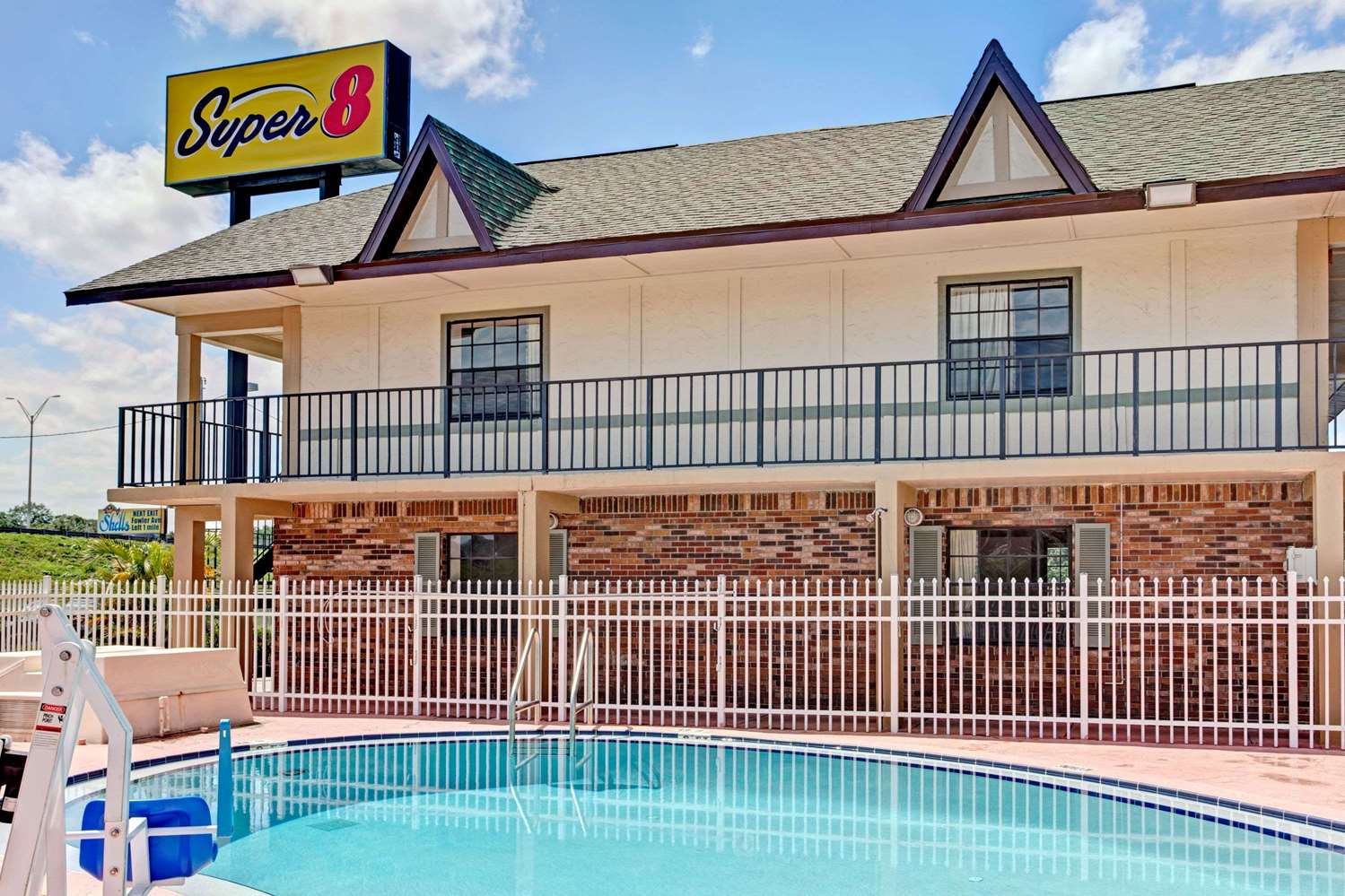
As you can see, the outside of the motel looks a little more old fashioned and run down, but just know that these are all GOOD pictures of this place, the actual location was a lot more run down and creepy than the pictures suggest, however is isn't horrible (but till bad). This fits the feel of our film, as it needs to look like it is lived in and worn slightly so it doesn't look like a Febreeze commercial, however it isn't overwhelmingly worn down and messy.


As you can see, the outside of the motel looks a little more old fashioned and run down, but just know that these are all GOOD pictures of this place, the actual location was a lot more run down and creepy than the pictures suggest, however is isn't horrible (but till bad). This fits the feel of our film, as it needs to look like it is lived in and worn slightly so it doesn't look like a Febreeze commercial, however it isn't overwhelmingly worn down and messy.
Subscribe to:
Posts (Atom)